Leak detection in Belfast: how to spot a hidden water leak before it damages your home
Suspect a hidden water leak in your Belfast home? We explain how to find it, what causes it, and when to call an emergency plumber.

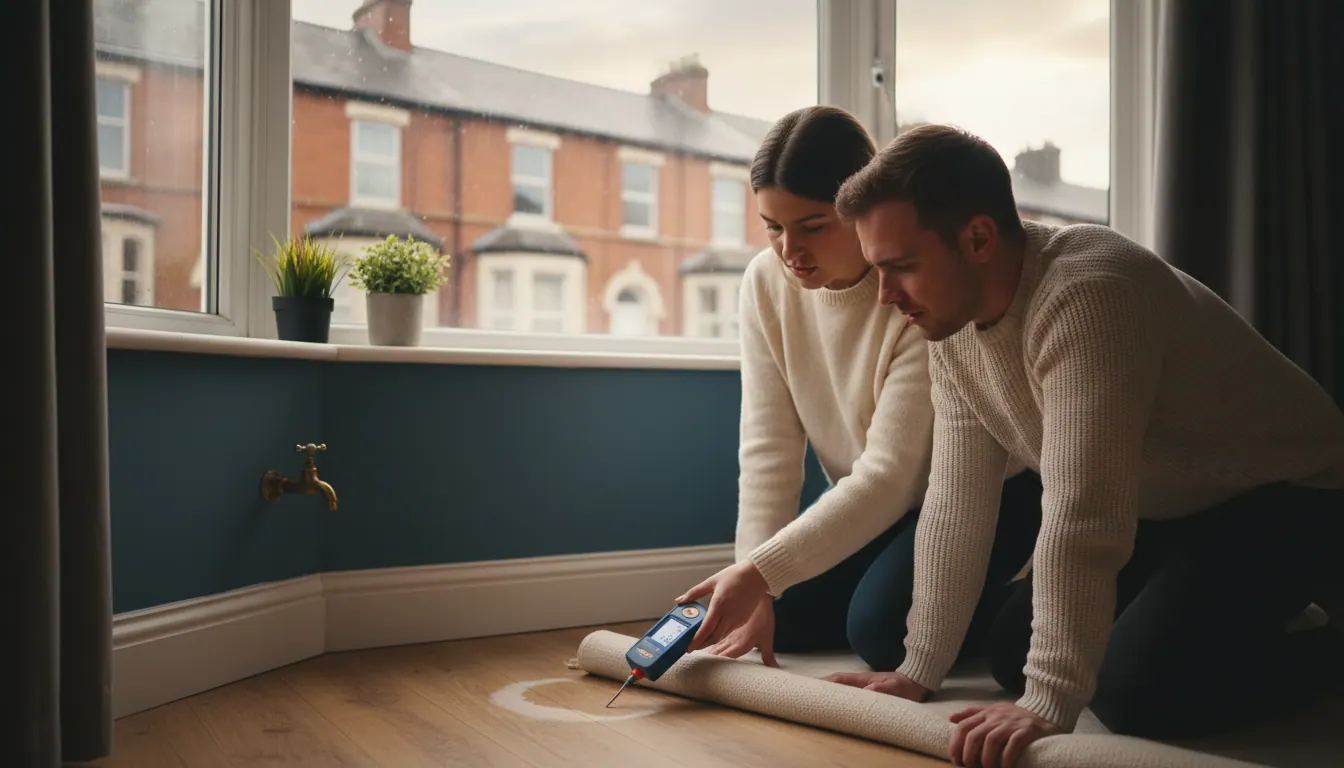
A damp patch on the wall. A water bill that seems too high. A floor that feels soft underfoot.
These are the quiet signs that something is wrong. Not every leak announces itself with water pouring through the ceiling. Some leaks hide inside walls, under floors, or beneath concrete for weeks before the damage becomes obvious. By the time you see the stain, the rot or the mould, water has usually been sitting somewhere it should not for a good while.
Leak detection is the process of finding exactly where that water is coming from. Get it right and you fix the actual problem. Get it wrong and you keep patching symptoms while the real damage carries on.
Here is what we know from working on Belfast homes and properties across the surrounding areas, and what you can do to get ahead of it.
Why Belfast homes are particularly prone to hidden leaks
Older housing stock is the short answer. Belfast has a huge number of Victorian and Edwardian terraces, pre-war semis, and post-war social housing. These properties were built with lead, iron or early copper pipework, much of which has never been replaced. Joints corrode. Pipes move with temperature changes. Seals that were fine twenty years ago start to weep.
Then there is the weather. Northern Ireland gets a lot of rain, and temperatures drop sharply from autumn onwards. Freeze-thaw cycles put pressure on pipework that was already under stress. A pipe that survives nine winters can fail on the tenth. If you want to understand exactly why older Belfast homes are at more risk when the temperature drops, our article on burst pipes in Belfast terraces covers it in detail.
Water pressure from NI Water's mains supply can also be a factor. High pressure puts strain on older joints and fittings, particularly at bends and connections. That slow drip behind a kitchen unit or inside a partition wall often starts at a joint that has simply had enough.
How to check where a leak is coming from
You do not need specialist equipment to start narrowing it down. These steps cost nothing and can save a lot of time.
Check your water meter first. Turn off every tap, appliance and cistern in the house. Go to your water meter (usually in a small chamber near the front boundary of the property) and watch the dial for ten to fifteen minutes. If the dial is moving and nothing is running, water is going somewhere it should not. This is one of the most reliable early indicators of a hidden leak.
Locate your stopcock and check around it. Your internal stopcock is typically under the kitchen sink, but in older Belfast properties it can be in a cupboard, under the stairs, or even in a ground-floor bathroom. If you are unsure where yours is, our guide to finding your stopcock walks you through it. Check the area around it for moisture or staining.
Look for the obvious signs in sequence:
- Damp patches on walls or ceilings, especially if they are not near an external wall
- Soft or discoloured flooring, particularly around the kitchen, bathroom or utility room
- A musty smell that does not go away with ventilation
- Mould appearing on walls that are not affected by condensation elsewhere
- Bubbling or peeling paint on plasterboard
Check toilet cisterns. A constantly running toilet can waste a significant amount of water and is easy to miss. Drop a few drops of food colouring into the cistern and wait fifteen minutes without flushing. If the colour appears in the bowl, the flap valve is leaking. It is a simple fix but worth catching early.
Check under sinks and around appliances. Pull out the washing machine and dishwasher if you can. Look at the hose connections. Check the valves under bathroom and kitchen sinks. These are common failure points and are often spotted too late because nobody looks there until there is a problem.
Do water leak detectors really work?
The simple consumer devices you can buy online, the ones that sit on the floor and beep if they get wet, do work for what they are designed to do. They will alert you if water reaches the sensor. That is useful under a sink or behind a washing machine where you would not normally notice a slow drip until damage was done.
What they cannot do is find a leak inside a wall or under a floor. For that, professional detection methods are needed. Acoustic listening equipment can pick up the sound of water escaping from a pressurised pipe. Thermal imaging can reveal temperature differences caused by moisture behind plasterboard. Tracer gas testing can pinpoint a leak in buried pipework without any digging.
The consumer devices are worth having in vulnerable spots. But if you suspect something is leaking inside the structure of your home, that is a job for a plumber with the right tools.
How to report a water leak in Northern Ireland
This depends on where the leak is.
If it is on the public main (the pipe running under the street or pavement), that is NI Water's responsibility. You can report it through the NI Water website or by calling their helpline. They will send their own team to investigate and repair it.
If it is on your property (from the point where the supply enters your home onwards), it is your responsibility as the homeowner. That includes the supply pipe from the boundary, all internal pipework, and any external taps or standpipes on your land.
If you are a tenant, report it to your landlord or letting agent immediately and document it in writing. They are responsible for organising repairs, though you should turn off the water at the stopcock if there is any risk of damage while you wait.
If you are a landlord and a tenant has reported a leak, do not leave it. A small leak left unattended can cause structural damage, mould, and in serious cases can affect the electrics. Get someone to look at it promptly.
When a leak becomes an emergency
Not every leak needs a 3am call-out. A slow drip from a tap or a slightly damp patch under a sink can usually wait until morning if you catch it early and keep an eye on it.
But some situations cannot wait:
- Water coming through a ceiling (it may be near electrical fittings)
- A pipe that has burst and water is flowing freely
- Water pressure has dropped suddenly and you cannot find the cause
- You can hear water running constantly and cannot isolate it
- A leak is affecting a neighbouring property
In any of these situations, turn off the water at the stopcock immediately. If water is near any electrical fittings or consumer units, switch off the power at the fuse board and do not touch any switches or sockets until a professional has checked it. Then call an emergency plumber.
We are available for emergency call-outs across Belfast and the surrounding areas, including nights and weekends. A burst pipe does not wait for Monday morning, and neither do we.
Frequently asked questions
How do I know if I have a hidden water leak in my Belfast home? The most reliable method is the water meter test. Turn off everything that uses water, then watch your meter for ten to fifteen minutes. If it is still moving, you have a leak somewhere. Other signs include unexplained damp patches, a musty smell, soft flooring, or a water bill that seems higher than it should be.
Do water leak detectors really work? The floor-sensor type you can buy in DIY shops will detect water that reaches them, which is useful under sinks or behind appliances. They will not find a leak inside a wall or under a floor. For anything hidden inside the structure of your home, you need a plumber with acoustic or thermal detection equipment.
How do I report a water leak in Northern Ireland? If the leak is on the public main (under a road or pavement), contact NI Water directly through their website or helpline. It is their pipe, their repair. If the leak is on your property, from the boundary inward, it is yours to sort. Call a plumber.
Can a small leak wait, or should I call someone straight away? A very slow drip from a visible fitting can often wait a short while if you keep an eye on it and mop up any water. But if you cannot see where the water is coming from, if it is coming through a ceiling, or if it is anywhere near electrics, treat it as an emergency. Turn off the water and call us. The longer hidden water sits, the more damage it does.
Get help with a leak in Belfast
If you have spotted the signs of a leak, or you just want someone to check something that does not feel right, get in touch with us. We cover Belfast and the surrounding areas, and we are available for emergencies when you need us most. Tell us what you are seeing and we will take it from there.