Garden drains and gully clearing: why Belfast's autumn leaves block your outside pipes
Garden drain blocked in Belfast? We explain the causes, what you can try yourself, and when to call us for a proper fix. Practical advice for local homes.

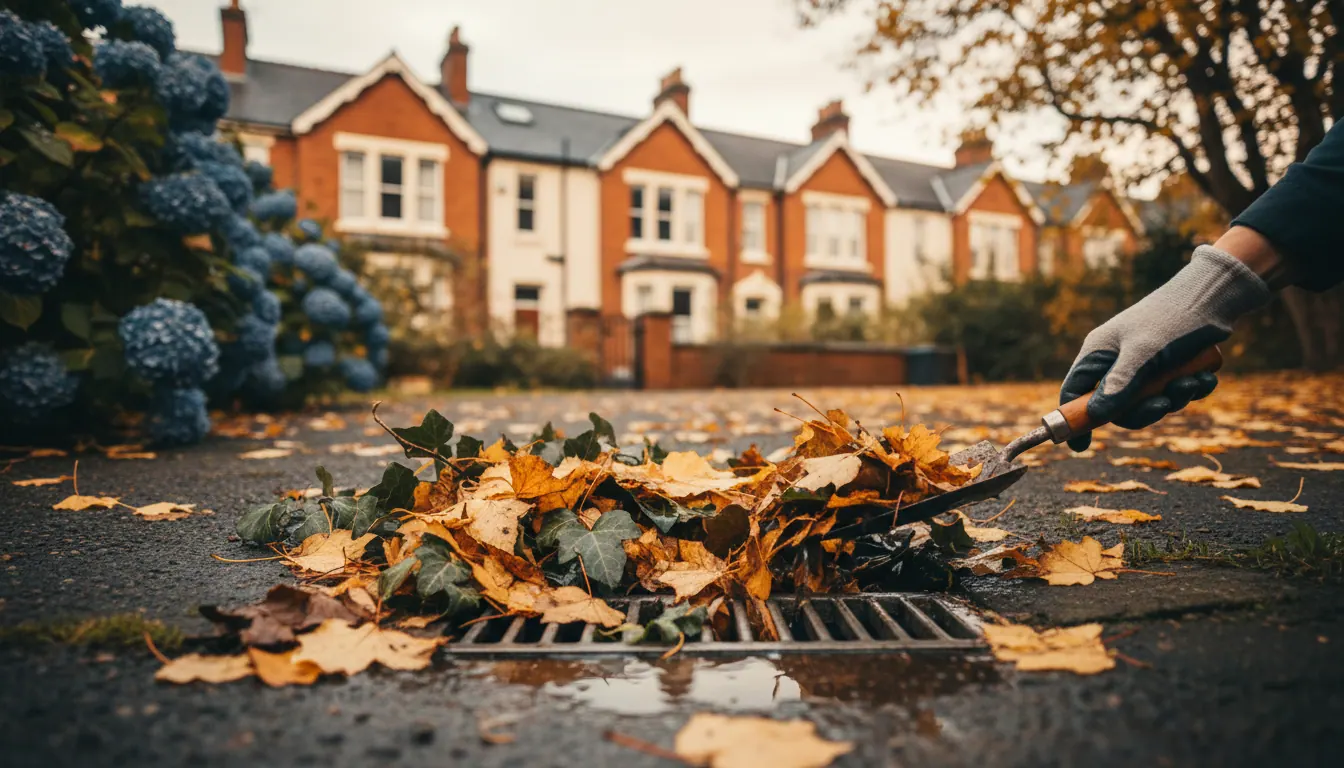
A blocked garden drain in Belfast is not just a puddle problem
Standing water in the garden after rain is easy to ignore. It looks like the ground is just saturated, which in a Belfast autumn is hardly unusual. But if the same spot stays wet for hours after the rain stops, or water is backing up around a gully or inspection chamber, you likely have a blocked garden drain on your hands.
Left alone, it gets worse. Water finds the path of least resistance, and that path sometimes leads under a doorstep, through a wall cavity, or up through a ground-floor floor. A blockage that costs a straightforward fix today can turn into damp, structural damage, or a flooded utility room if it sits through a wet winter.
Here is what causes it, what you can reasonably try yourself, and when it makes more sense to call us.
Why garden drains block in Belfast homes
Belfast's housing stock is dominated by Victorian and Edwardian terraces, inter-war semis, and post-war builds. Most of them have drainage systems that were designed for a different era of rainfall and, in many cases, have not been touched since.
The most common causes of a blocked garden drain around here:
- Autumn leaf fall. Gully grates fill up fast between October and December. Leaves compact into a soggy mat that water cannot get through.
- Silt and soil wash. Heavy rain lifts fine soil and washes it into open gullies. Over time it builds up into a dense sediment plug.
- Root intrusion. Older clay or pitch-fibre pipes crack with age. Tree and shrub roots find those cracks and grow into them, eventually causing a partial or full blockage.
- Fat and debris from kitchen waste. Where a kitchen waste pipe exits at the back of a property, grease can solidify in the outdoor section, especially in cold weather.
- Structural damage. Pipes that have shifted, collapsed, or been disturbed by ground movement simply stop draining properly. This is more common in older terraces where ground conditions vary.
- Combined drain overload. Some older Belfast properties have combined drainage systems where surface water and foul water share the same pipe. In heavy rain, the system can back up.
Understanding which of these you are dealing with helps you decide whether a bucket and a pair of gloves will sort it, or whether you need a camera down the pipe.
What you can try yourself first
Some garden drain blockages are genuinely DIY territory. Here is a sensible order of things to try before picking up the phone.
1. Clear the gully grate. Lift it off, pull out the debris by hand (gloves on), and hose the grate clean. This alone fixes a surprising number of slow-draining garden gullies.
2. Pour boiling water down the gully. If grease or soap scum is contributing, a kettle of boiling water can shift a soft blockage. Do this a couple of times with a few minutes between each pour.
3. Use a drain rod if you have one. Drain rods are cheap to hire or buy. Feed them into the inspection chamber, attach the plunger or worm screw head, and work it back and forth. This is effective for soft blockages in the pipe run between the gully and the chamber.
4. Flush through with a hose. A garden hose on full pressure, directed straight down the gully, can dislodge a partial blockage and carry debris further down the system where it clears.
A quick note on salt and washing-up liquid: you will see these suggested online as drain-clearing hacks. Salt can help slow down organic build-up over time if used regularly as a maintenance measure, but it will not clear a blockage that is already there. Washing-up liquid, including fairy liquid, works as a lubricant for soft grease deposits but is not strong enough to shift a compacted blockage on its own. These are maintenance tools, not fixes.
When to stop and call us
Some blockages are beyond what a drain rod and a hose can reach. Call us if:
- Water is backing up in the inspection chamber and not shifting after rodding
- You can see visible damage to a chamber wall or pipe
- Multiple drains in the property are running slow at the same time
- There is a smell of sewage coming from the drain, not just stale water
- The blockage keeps coming back within a few weeks of clearing it
- Water is getting close to a doorstep, airbrick, or external wall
That last point matters in Belfast terraces especially. Airbricks sit low to the ground on a lot of older properties, and a backed-up gully can push water through them and into the sub-floor space. That is a much bigger problem than a blocked drain.
We can rod, jet, and inspect garden drains properly. If the blockage turns out to be root intrusion or a collapsed pipe, we will tell you exactly what we are looking at.
Who is responsible for the drain in your garden?
This is a question that causes genuine confusion, and the answer depends on where the drain is and what it connects to.
Private drains are your responsibility. A drain that runs only from your property, within your boundary, belongs to you. Clearing it, repairing it, paying for it: all yours.
Shared or public sewers are the responsibility of NI Water. If the pipe serves more than one property, or if it runs beyond your boundary to connect to the public sewer, NI Water should be your first call for faults in that section.
In practice, the blockage is usually in the private section. The gully, the pipe run to the inspection chamber, and the chamber itself are almost always the homeowner's side of the line. If you are a tenant, your landlord is responsible for drainage maintenance and repairs.
If you are not sure where your private drain ends and the public sewer begins, NI Water can advise. Their maps are not always publicly available, but their customer team can help, particularly if you suspect the problem is in the shared section.
Older Belfast terraces: a word of warning before winter
If you live in a terrace built before the 1960s, your drainage system almost certainly uses clay or pitch-fibre pipes. Both materials crack and deform over time. Clay joints open up. Pitch fibre softens and collapses inward. Neither shows any outward sign of failure until water stops flowing.
A CCTV drain survey is the only way to know the condition of an older pipe run. If you have had recurring blockages, persistent damp at the back of the house, or unexplained wet patches in the garden, it is worth having the drains inspected properly rather than rodding it again and hoping for the best.
We have written more about what happens when Belfast's heavy rain hits older drainage systems in our article on blocked drains after heavy rain in Belfast: is it your pipes or the sewer?.
Keeping your garden drain clear through winter
A few straightforward habits make a real difference:
- Clear gully grates every couple of weeks in autumn. Takes two minutes and prevents the most common blockage.
- Cut back plants and shrubs near drain runs. Roots are slow, but they are relentless. Keep vegetation away from older clay pipe runs if you can.
- Do not wash cooking fat down an outdoor drain. Let it cool, scrape it into the bin.
- Check inspection chambers after heavy rain. Lift the cover and look. If water is sitting high in the chamber rather than flowing through, you have a partial blockage downstream.
- Flush gullies with a hose occasionally. A five-minute rinse every month keeps sediment moving.
Frequently asked questions
How do you unblock an outdoor drain?
Start by clearing the gully grate by hand, then try boiling water or a hose on full pressure. If that does not shift it, drain rods with a plunger head are the next step. Feed them into the nearest inspection chamber and work the blockage loose. If the chamber is full and not draining, or the blockage keeps returning, it is time to call a plumber rather than keep rodding.
Does fairy liquid unblock drains?
Not really. Washing-up liquid can help loosen a light grease deposit, but it will not clear a compacted blockage of leaves, silt, or debris. It is occasionally useful as a lubricant when rodding, but treat it as a minor aid rather than a solution. For a proper blockage, you need physical clearance, not a cleaning product.
Why do people pour salt down the drain every night?
Salt is sometimes used as a low-level maintenance measure. The idea is that it draws moisture and discourages organic build-up in the pipe over time. It is not a cure for a blockage that already exists. If your drain is already blocked, salt will not help. If it is running freely, a regular salt flush is a harmless habit but not essential.
Who is responsible for a blocked drain in my garden?
If the drain runs only from your property and stays within your boundary, it is your responsibility. If it serves neighbouring properties or continues beyond your boundary to the public sewer, that section falls to NI Water. Most garden drain blockages happen in the private section, which means the homeowner (or landlord, if the property is rented) is responsible for sorting it.
Need a hand with a blocked garden drain in Belfast?
If you have tried the basics and the drain is still not shifting, or if you want someone to inspect the pipes properly before winter sets in, get in touch with us. We cover Belfast and the surrounding areas, and we are available for both planned drain work and emergencies.