Leaking radiators and losing pressure: what's wrong and when to call a plumber
Got a leaking radiator in Belfast? Here is what to check, what to do straight away, and when to call us for a fast, reliable fix.

A wet patch under your radiator is not something to ignore
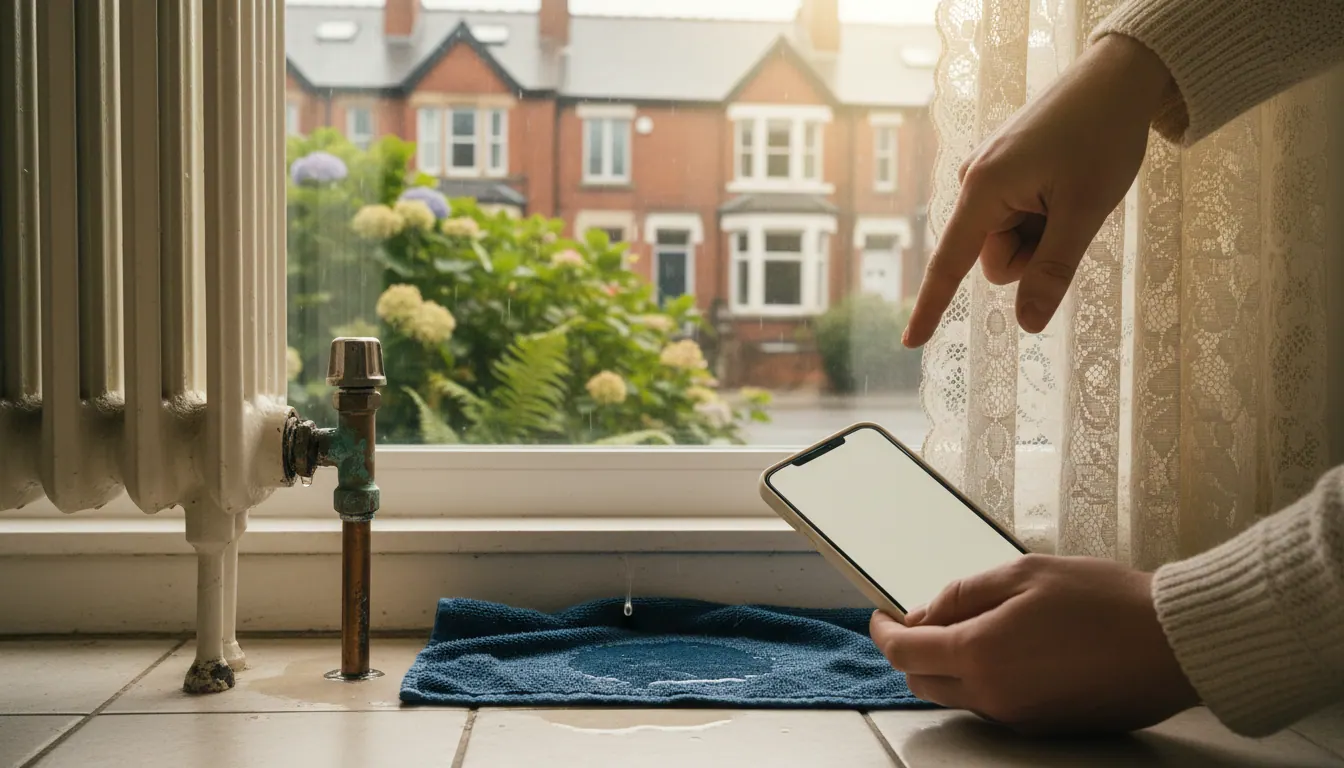
Water on the floor around a radiator is one of those things Belfast homeowners often put off dealing with. It starts as a small damp patch, maybe just a bit of rust staining on the skirting board, and it can sit there for weeks before anyone takes it seriously. By that point, the floor, the wall and sometimes the ceiling below have all taken a hit.
We see this a lot, particularly as the heating season kicks in properly. Radiators that have sat idle all summer often start weeping once the system heats up again. The metal expands, old fittings shift slightly, and a joint that was borderline suddenly becomes a proper drip.
This guide covers what causes a leaking radiator in Belfast homes, what you can safely check yourself, and when it is time to get us involved.
Why radiators leak: the common causes in Belfast homes
Belfast's housing stock is a big part of the story here. A large proportion of homes in the city and the surrounding areas are Victorian and Edwardian terraces, or post-war semis, with heating systems that have been added to, extended and bodged over many decades. Older pipework, mixed metals and fittings that have been tightened and loosened countless times all add up.
The most common causes we find are:
- A weeping radiator valve. The valve at the bottom of the radiator (either the lockshield or the thermostatic radiator valve) develops a slow drip around the gland nut or the valve body. This is often the first thing to go on older systems.
- A leaking bleed point. The bleed valve at the top corner of the radiator can start to seep if the screw is not seated properly, or if the valve body has corroded.
- A pinhole in the radiator body itself. This is more common on older cast-iron or steel radiators. Internal corrosion eats through from the inside, and you get a tiny but persistent drip that is hard to spot until there is a rust stain on the floor.
- A joint in the pipework beneath or behind the radiator. The compression fittings connecting the radiator to the flow and return pipes can work loose over time, especially if the pipes have been knocked or if there has been any movement in the floor.
- Sludge and corrosion in the system. A system that has never been flushed builds up magnetite sludge, which is corrosive and accelerates internal damage to radiator panels.
What you can do before we arrive
There are a few things worth checking and doing straight away when you spot a leak.
Find out where the water is actually coming from. Dry the area around the radiator with a cloth, then watch closely for a minute or two. Is it dripping from a valve? Seeping from the bleed point? Coming from a joint in the pipe below? Knowing this helps us work faster when we get there.
Turn off the radiator valves. Most radiators have a valve at each end. Turn both clockwise until they stop. This isolates that radiator from the rest of the system and should slow or stop the leak in most cases. It does not affect the rest of your heating.
Put down towels or a container. A slow drip can still cause real damage to a timber floor or the ceiling below. Catch the water while you wait.
Do not try to tighten a leaking valve body with the system under pressure. If the valve body itself is cracked or corroded, tightening it can make things worse. Isolate, contain, and call us.
Check your system pressure. If you have a sealed central heating system (most modern Belfast homes do), have a look at the pressure gauge on your system. A leaking radiator will cause the pressure to drop over time. If it has dropped noticeably, note it down and tell us when you call.
If you want to understand more about how leaks in your heating system can connect to wider water damage in the home, our article on leak detection in Belfast covers what to look for and when a problem is bigger than it first appears.
Do radiator leak sealers actually work?
This comes up a lot, so it is worth being straight about it.
Radiator leak sealers (the kind you pour into the system or add via a bleed valve) can work on very small, pinhole-sized leaks inside the radiator body. They are not a fix for a leaking valve, a loose joint, or a cracked fitting. They work by circulating through the system and depositing a sealant at the point where water is escaping.
The problem is that they can also clog up other parts of the system, particularly micro-bore pipework, thermostatic valves and heat exchangers. On older Belfast systems that already have sludge build-up, adding a liquid sealant can cause more problems than it solves.
Our honest advice: if the leak is from a valve, a joint or a bleed point, a sealant will not fix it. If you think it might be a pinhole in the panel itself, give us a call before you reach for a bottle. We can usually tell from a quick look whether it is worth trying or whether the radiator needs replacing.
When a leaking radiator points to a bigger system problem
Sometimes a leaking radiator is just a leaking radiator. A valve seal has gone, or a joint has worked loose, and it is a straightforward job.
But sometimes it is a sign of something wider. If you are seeing multiple radiators weeping, or if your system pressure keeps dropping even after you top it up, or if you are getting cold spots at the bottom of radiators alongside the leak, the system may have a significant sludge or corrosion problem. That is worth looking at properly rather than just patching each leak as it appears.
Cold spots on radiators are covered in detail in our article on cold spots on your Belfast radiators, which explains when bleeding is enough and when a power flush is the right call.
One thing worth being clear on: if the leak appears to be at or near the boiler itself, or if it involves any gas pipework or gas appliances, that is work for a Gas Safe registered engineer, not a plumber. We handle the wet side of your heating system. Anything involving the gas supply or the boiler's combustion components needs a Gas Safe professional.
Radiator leaks in older Belfast terraces: what makes them different
If you are in an older terrace, you will likely have pipework running under floorboards or through walls that has not been touched since the heating was first put in. That means:
- Older compression fittings that have been tightened repeatedly and may be at the end of their life
- Possible mixing of copper and iron pipework, which accelerates corrosion at the joints
- Systems that have never been chemically treated or flushed
- Radiators that are original to a 1970s or 1980s installation
None of this means the system is about to fail completely, but it does mean a leak is more likely to be part of a wider picture. When we come out to a leaking radiator in an older home, we always have a look at what else is going on rather than just fixing the one drip and leaving.
Frequently asked questions
What should I do if a radiator in my house is leaking?
Turn off both valves on the radiator (clockwise until they stop), dry the area and put down towels or a container to catch any drips. Try to identify where the water is coming from. If it is a valve or a joint, isolate the radiator and call a plumber. Do not try to dismantle a valve or fitting while the system is under pressure.
Do radiator leak sealers work on home central heating systems?
They can work on very small pinholes inside the radiator panel, but they will not fix a leaking valve, loose joint or cracked fitting. On older systems with sludge build-up, they can cause additional problems. Get a plumber to look at it first before using any sealant product.
Why does my radiator keep leaking even after it has been repaired?
If a radiator keeps developing leaks, or if you are seeing leaks on multiple radiators, it usually points to a system-wide issue. Corrosion and sludge inside the pipework put pressure on fittings and radiator panels over time. A power flush and a corrosion inhibitor treatment can address the root cause rather than just the symptoms.
Can I leave a leaking radiator and just top up the system pressure?
Not really. Topping up the pressure replaces the water that has escaped, but the leak is still there. Over time, water escaping from a central heating system causes staining, damp and structural damage. It can also draw air into the system, which causes noise, cold spots and accelerated corrosion. Get it sorted properly rather than managing it with the filling loop.
Get it sorted properly
A leaking radiator in Belfast is not an emergency in the same way a burst pipe is, but it is worth dealing with quickly before it causes damage to your floors, walls or the ceiling below. We cover Belfast and the surrounding areas, and we are available around the clock, seven days a week, for genuine emergencies.
If you have a leaking radiator and you want someone to come and look at it properly, get in touch with us and we will sort it.