Radiator not heating up in Belfast: trapped air, sludge, or a broken valve?
Radiator not heating in Belfast? We explain the common causes, what you can check yourself, and when to call us. Available 24/7 across Belfast and surrounding areas.

Your radiator is cold. Here is what is actually going on
A cold radiator is one of those problems that creeps up on you. You rest your hand on it during a damp Belfast evening, realise it is barely warm, and suddenly wonder how long it has been like that. Sometimes it is a quick fix you can do yourself. Sometimes it is a sign of something deeper in the system. This guide walks through the real causes, in plain language, so you know what you are dealing with before you pick up the phone.
We cover Belfast and the surrounding areas, and we are available around the clock, seven days a week. So if this turns into an emergency, we are here.
The most common reasons a radiator stops heating in Belfast homes
Belfast housing stock is a mix of Victorian terraces, 1930s semis, post-war builds and more recent developments. The age of your system matters. Older pipework, older radiators and years of accumulated sludge all play a part in why one or more radiators stops doing its job.
Here are the most likely culprits.
Air trapped in the radiator
This is the most common cause, and it is the one you can fix yourself. Air gets into the system over time and sits at the top of the radiator, stopping hot water from filling the whole panel. The result is a radiator that is warm at the bottom but cold at the top.
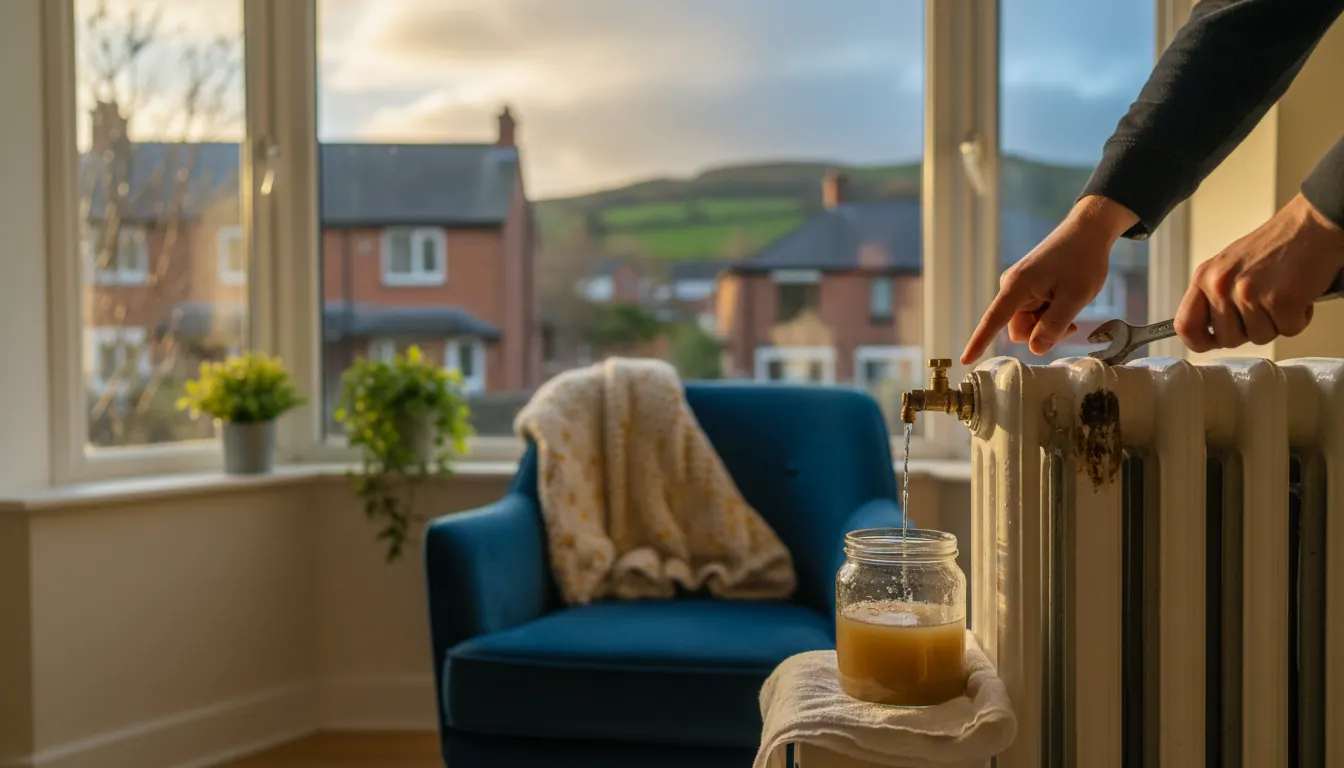
The fix is bleeding the radiator. You need a radiator bleed key (available from any hardware shop) and a cloth. Turn the heating on, wait until the system is up to temperature, then turn it off and let it cool slightly. Hold the cloth under the bleed valve (the small square fitting at the top corner of the radiator), insert the key and turn it slowly anti-clockwise. You will hear a hiss as the air escapes. When water starts to drip out steadily, close the valve. Job done.
After bleeding, check your system pressure. If it has dropped, you may need to top it up via the filling loop. If you are not sure how to do that, or you do not have a filling loop, give us a call.
Sludge and magnetite build-up
This one is very common in older Belfast homes. Over years, the inside of steel radiators corrodes and produces a black, gritty sludge (magnetite). It settles at the bottom of the radiator and blocks the flow of hot water. The symptom is a radiator that is cold at the bottom but warm at the top, or just generally cooler than it used to be.
You can sometimes feel the difference by touching the radiator in different spots. A heavy, uneven heat pattern is a giveaway.
The solution is a power flush. We connect specialist equipment to the system, force water and cleaning solution through at high pressure and flush the sludge out. It makes a noticeable difference, particularly in systems that have never been flushed. We also fit a magnetic filter at the same time where possible, which catches new sludge before it builds up again.
We have written more about this in our article on cold spots on your Belfast radiators: bleeding, power flushing, or a plumbing fault?
A stuck or faulty thermostatic radiator valve (TRV)
Most radiators have a TRV on one side, the valve with the numbered dial. They are useful for controlling individual room temperatures, but they do stick, especially if the heating has been off for a while over summer.
A stuck TRV pin is easy to check. Unscrew the plastic head from the valve body (it usually just pulls or twists off). Underneath you will see a small pin. Press it in and see if it springs back freely. If it is seized in the down position, the valve is closed and no hot water can get in. Sometimes you can free it by gently gripping the pin with pliers and working it up and down. If the valve itself is corroded or cracked, it needs replacing.
Balancing issues across the system
If some radiators in the house are hot and others are cold, the system may be unbalanced. Hot water takes the path of least resistance, so radiators close to the pump get more flow than those at the far end of the circuit. This is common in larger houses and in older systems where the pipework has been extended over the years.
Balancing involves adjusting the lockshield valves (the capped valve on the opposite side of the radiator from the TRV) to restrict flow to the nearer radiators and push more water to the distant ones. It is a methodical job that takes time and a thermometer. We can do this as part of a heating pipework service.
A pump or circulation problem
If multiple radiators are cold and bleeding does not help, the issue may be with the circulating pump. If the pump fails or slows down, hot water simply does not move around the system properly. This is a job for a plumber. We handle the wet side of heating systems, including pump replacement and pipework. If the fault turns out to involve the boiler itself, that needs a Gas Safe registered engineer.
A leaking or poorly fitted radiator valve
Sometimes a valve develops a drip at the base or around the fitting. Even a slow leak can drop system pressure enough to affect heating performance. If you notice damp patches on the floor near a radiator, or the pressure on your system keeps dropping, that is worth investigating quickly. We cover radiator valve leaks and heating pipework repairs across Belfast and the surrounding areas.
Our article on leaking radiators and losing pressure goes into more detail on this.
What to check before you call us
Before you ring, run through these quickly:
- Is the heating actually switched on and set to the right temperature on the programmer?
- Is the system pressure within the normal range (usually between 1 and 1.5 bar when cold)?
- Is it just one radiator, a few, or all of them? That tells us a lot.
- Is the cold radiator hot at one end and cold at the other, or uniformly cold?
- Have you bled it recently?
The answers to those questions will help us diagnose the fault faster when we arrive.
What our customers say
Great work boys did a brilliant job and left the place spotless would use again
Lewis Clark, 5 stars. That is the standard we hold ourselves to on every job, whether it is a straightforward radiator valve swap or a full heating pipework overhaul.
When it becomes an emergency
A cold radiator in one room is inconvenient. But some heating faults escalate quickly, particularly in winter. If a valve fails and starts leaking, if a pipe joint gives way, or if you lose heat across the whole house during a cold snap, that is a different situation.
We are available 24 hours a day, seven days a week. If a heating pipe bursts or starts spraying water, turn off the water at your stopcock first. If you are not sure where yours is, our guide on finding your stopcock will walk you through it.
Northern Ireland winters are wet and cold, and Belfast homes, particularly the older terraces, can lose heat fast when something goes wrong. We take those calls seriously at any hour.
Frequently asked questions
Why is my radiator cold at the bottom but warm at the top in Belfast?
That pattern almost always means sludge. Magnetite and debris settle at the bottom of the radiator over time and block the flow of hot water through the lower section. Bleeding will not fix it. A power flush is usually needed. The older your system, the more likely this is the cause.
Why is only one radiator not heating when the rest are fine?
It is usually one of three things: a stuck TRV pin, a closed lockshield valve, or localised sludge in that particular radiator. Check the TRV first (see above). If that is not the issue, give us a call and we can isolate and resolve it.
Should I bleed radiators with the heating on or off?
Turn the heating on first so you can identify which radiators need bleeding (cold at the top). Then turn the system off and let it cool slightly before you bleed. This avoids scalding water spraying out when you open the valve.
Can a plumber fix a radiator not heating, or does it need a Gas Safe engineer?
It depends on where the fault is. Everything on the wet side of the heating system, including radiators, valves, pipework and the pump, is plumbing work and we handle it. If the fault is in the boiler itself, that requires a Gas Safe registered engineer. We will always tell you honestly which it is when we assess the job.
Get in touch
If your radiator is not heating and you want someone to come and sort it properly, call us. We cover Belfast and the surrounding areas, day or night, and we will tell you straight what the problem is and what it takes to fix it.
“Reliable, very helpful, couldnt recommend enough”